
Finding the right self-improvement books for families is harder than it looks. Most parents don't have time to sort through hundreds of titles, and too many books on the shelf deliver vague advice that doesn't translate to real family life. The books that actually work do something different: they combine brain science with tools you can use at dinner, bedtime, or during a meltdown. This guide cuts through the noise, gives you a clear framework for choosing the right titles, and highlights the books that consistently deliver results for parents, caregivers, and kids alike.
Table of Contents
- How to choose self-improvement books that benefit your whole family
- The Whole-Brain Child series: nurturing your child's mental growth
- Brain-Body Parenting: a fresh approach to behavior through nervous system understanding
- Supporting mental wellness: healthy routines with sleep and screen time guidelines
- Comparing top self-improvement books for families: features and focus areas
- Pro tips for maximizing the benefits of self-improvement books in your family
- Why learning to love yourself transforms family wellness more than control tactics
- Supporting your parenting journey with Arthur Scott Publishing
- Frequently asked questions
Key Takeaways
| Point | Details |
|---|---|
| Choose interactive books | Books with exercises and worksheets help both parents and children apply self-improvement concepts effectively. |
| Emphasize emotional skills | Prioritize titles that focus on emotional regulation and co-regulation to reduce family conflict. |
| Parental self-care matters | Taking care of yourself enhances your capacity to support your children’s mental wellness. |
| Healthy routines support growth | Incorporate guidelines from trusted sources like the CDC for screen time and sleep habits. |
| Shift from control to connection | Fostering love and connection transforms family dynamics more deeply than traditional discipline. |
How to choose self-improvement books that benefit your whole family
Not every book labeled "family wellness" is worth your time. The most effective self-improvement ideas for families come from books that treat behavior as information rather than a problem to fix. Before you buy anything, run it through these four filters.
1. Does it use evidence-based strategies?
Look for authors with backgrounds in neuroscience, developmental psychology, or clinical practice. Gut-feeling parenting advice has its place, but when you're trying to shift deeply ingrained patterns, you need something grounded in research. A good family self-discovery guide pairs the science with accessible language, so you don't need a psychology degree to apply it.
2. Does it include interactive elements?
Books that give you worksheets, reflection exercises, or family discussion prompts close the gap between reading and doing. You retain far more when you practice a concept than when you simply understand it intellectually.
3. Does it address emotional regulation, not just discipline?
The best personal development books for families shift from discipline-only approaches to skill-building that includes emotional regulation and co-regulation. Co-regulation means a calm parent physically and emotionally helps a dysregulated child return to balance. That's a learnable skill, and books that teach it are worth their weight.
4. Does it take parental self-care seriously?
Your nervous system affects your child's nervous system. A book that ignores your well-being while telling you how to manage your child is missing the most important variable. Look for titles that treat self-awareness improvement methods for parents as core content, not an afterthought.
Here's a quick checklist before purchasing any family growth book:
- Written by a credentialed expert in child development, psychology, or neuroscience
- Includes practical activities or exercises, not just theory
- Addresses both parent and child emotional needs
- Grounded in current research (published within the last 15 years or recently updated)
- Readable in 20-minute chunks (because that's often all parents have)
With clear criteria established, let's explore top self-improvement books that align with these principles.
The Whole-Brain Child series: nurturing your child's mental growth
When parents ask for the single best entry point into family growth books, The Whole-Brain Child by Daniel Siegel and Tina Payne Bryson comes up almost every time. And for good reason.

The book explains, in plain language, how children's brains develop and why certain behaviors that look like defiance are often just underdeveloped neural wiring. It presents 12 strategies to nurture a child's developing mind, organized around the idea that you can help a child "integrate" different parts of their brain in real time. For example, when a child is in emotional chaos, the strategy of "connect and redirect" asks parents to first meet the child emotionally before logic enters the conversation.
Here's what makes this book stand out from other best self-help books for families:
- It explains the neuroscience without making it feel like a lecture
- The strategies work for kids ages 2 through 12, with context for each stage
- Each chapter ends with a short "What You Can Do" summary for fast reference
- It reads like a conversation, not a textbook
"Understanding the brain is not about raising perfect children, it is about raising children who understand themselves." This framing, embedded throughout Siegel and Bryson's work, shifts the entire goal of parenting toward self-knowledge rather than compliance.
The companion volume, The Whole-Brain Child Workbook, takes things further. It offers interactive exercises that let parents and children practice integration skills together, with age-specific activities that make abstract concepts concrete. Think fill-in-the-blank reflections, body-awareness exercises, and family conversation starters.
Pro Tip: Don't wait until a crisis to open the workbook. Use one exercise per week as a family practice, even when things are going well. The skills build faster when children aren't already flooded with emotion.
The investment in personal growth and self-discovery that this series requires is modest. But the payoff, in fewer meltdowns and deeper conversations with your kids, is real.
Next, we'll examine another book that expands these concepts with a focus on the nervous system and parental self-care.
Brain-Body Parenting: a fresh approach to behavior through nervous system understanding
Brain-Body Parenting by Mona Delahooke takes the work of Siegel and Bryson a step further by focusing on the body's role in behavior. The core idea is that most challenging child behaviors aren't choices. They're symptoms of a stressed nervous system.
This "bottom-up" model means that instead of asking "how do I get my child to stop this behavior," you ask "what does my child's nervous system need right now?" That single reframe changes everything about how you respond. The book advocates a bottom-up approach focused on the nervous system, with co-regulation and parental self-care as its two essential pillars.
Here's how the model works in practice:
- Notice the behavior as a signal. Your child's tantrum, withdrawal, or aggression is information about their internal state, not a manipulation tactic.
- Check your own nervous system first. You cannot co-regulate a dysregulated child when you are dysregulated yourself. This is where parental self-care stops being a luxury and becomes a clinical necessity.
- Use connection to create safety. A calm presence, physical proximity, and a soft tone signal safety to a stressed nervous system before any words land.
- Introduce problem-solving after the storm. Once the child is regulated, the "top-down" brain functions like reasoning and planning come back online.
The practical benefits of this framework show up in how you understand psychology's role in family growth and apply it at home. Delahooke draws from her clinical background to offer specific strategies for children with sensory sensitivities, anxiety, and developmental differences, but the model works for neurotypical kids just as well.
Behavior is not the problem. It is the messenger. Treating the messenger as the problem is one of the most common mistakes parents make, and one of the most correctable.
For families looking to improve wellness routines, controlling screen time and prioritizing sleep is also essential.
Supporting mental wellness: healthy routines with sleep and screen time guidelines
No self-improvement book will reach its full potential in a family that is chronically sleep-deprived and overstimulated by screens. The research here is not subtle. The CDC recommends limiting screen time and encouraging physical activity to directly support children's mental health and sleep quality.
Here's what evidence-based daily routines look like for families:
- Screen-free windows of at least one hour before bedtime
- Consistent wake and sleep times, even on weekends
- Daily physical activity, ideally outdoors
- Family meals without devices at least three times per week
- Clear and predictable evening routines that reduce decision fatigue
For sleep specifically, Healthy Sleep Habits, Happy Child by Marc Weissbluth remains a step-by-step regimen built on updated research and focused on helping parents establish bedtime routines that actually stick. It addresses the most common challenges parents face, from early waking to night terrors, with practical solutions tied to a child's developmental stage.
Pro Tip: Think of sleep as a skill, not a given. Children learn to sleep well the same way they learn everything else: through consistent practice, environment design, and a calm caregiver helping them feel safe enough to let go.
Connecting to supporting children's well-being at the level of daily habits is what makes these books more than a reading project. They become a lifestyle shift.
Let's now look at a summary comparison to help you decide which book fits your family's needs best.
Comparing top self-improvement books for families: features and focus areas
Here's a side-by-side look at the key features of each recommended title. Use this to match your family's current needs to the right starting point.
| Book | Primary focus | Scientific foundation | Parent tools | Child age range | Best for |
|---|---|---|---|---|---|
| The Whole-Brain Child | Brain integration and emotional regulation | Neuroscience, developmental psychology | 12 strategies with examples | 2 to 12 years | Understanding child behavior |
| The Whole-Brain Child Workbook | Applied family practice | Same as above | Worksheets, activities | 2 to 12 years | Hands-on family engagement |
| Brain-Body Parenting | Nervous system and behavior | Clinical neuroscience | Bottom-up response model | All ages | Challenging behaviors and sensory needs |
| Healthy Sleep Habits, Happy Child | Sleep science and routine | Pediatric sleep research | Bedtime plans by age | Infant to teen | Sleep problems and routine building |
If you're new to family growth books, start with The Whole-Brain Child and add the workbook once you've read the first three chapters. If you're already past the basics and dealing with persistent behavioral challenges, go straight to Brain-Body Parenting. Sleep issues? Healthy Sleep Habits, Happy Child is its own category and should run alongside whichever other title you choose.
A deeper look at family growth strategies can help you organize these tools into a coherent plan for your household.
Pro tips for maximizing the benefits of self-improvement books in your family
Reading the book is the beginning. The families who see lasting change are the ones who treat these books as practice guides rather than passive reads. Here's how to do that.
- Read one chapter at a time and implement before moving forward. Momentum from application beats marathon reading sessions every time.
- Use the exercises together. When children participate in the activities, they internalize the concepts. This is especially true for the Whole-Brain workbook materials.
- Create a weekly family check-in. Ten minutes on a Sunday to talk about feelings, wins, and hard moments builds the habit of emotional openness that every book in this list points toward.
- Track small wins. The shift from a reactive response to a regulated one is a victory, even if the situation still felt hard. Notice it.
Parental well-being is not optional. Parental self-care is crucial for having the emotional capacity to co-regulate children and support their growth. This isn't guilt-inducing advice. It's neuroscience. You cannot pour from an empty container, and every book in this list reinforces that truth in its own way.
Pro Tip: Build your personal growth workflow around 15-minute daily reading windows instead of sporadic hour-long sessions. Consistency beats intensity almost every time.
Now that you have tools and options, here's a unique perspective that challenges common assumptions in family self-improvement.
Why learning to love yourself transforms family wellness more than control tactics
Here's the uncomfortable truth most parenting books dance around: the way you treat yourself when you make a mistake teaches your child more than anything you say to them.
Parents who are relentlessly self-critical raise children who internalize that same standard. Parents who model self-compassion, who say "I got frustrated and I handled that poorly, and I'm going to do better," raise children who learn that growth is possible and that mistakes are information, not verdicts.
Traditional discipline models often fail precisely because they focus on changing the child without changing the family system. But children don't grow in a vacuum. Their nervous systems are constantly reading yours. Their emotional range will, over time, reflect your emotional range. This is not blame. This is biology.
Books like Brain-Body Parenting highlight parental self-care and connection as more transformative than behavior management tactics. The research backs this up. When parents develop emotional regulation skills, their children's behavior improves, sometimes without any direct intervention with the child at all.
This is the perspective shift that separates families who read self-help books and feel more overwhelmed from families who read the same books and feel genuinely empowered. The goal isn't a perfectly behaved child. The goal is a family where everyone, including the adults, is learning to know themselves better, respond more skillfully, and connect more honestly.
The benefits of personal growth books show up most powerfully when parents use them as mirrors, not just as instruction manuals for their children.
Learning to love yourself is not a soft concept. It is the foundation of everything that actually works in family life.
Supporting your parenting journey with Arthur Scott Publishing
You don't have to navigate this alone. Dr. Arthur Scott, a psychologist and practicing musician, has built a platform specifically for parents and caregivers who want real tools, not recycled advice.
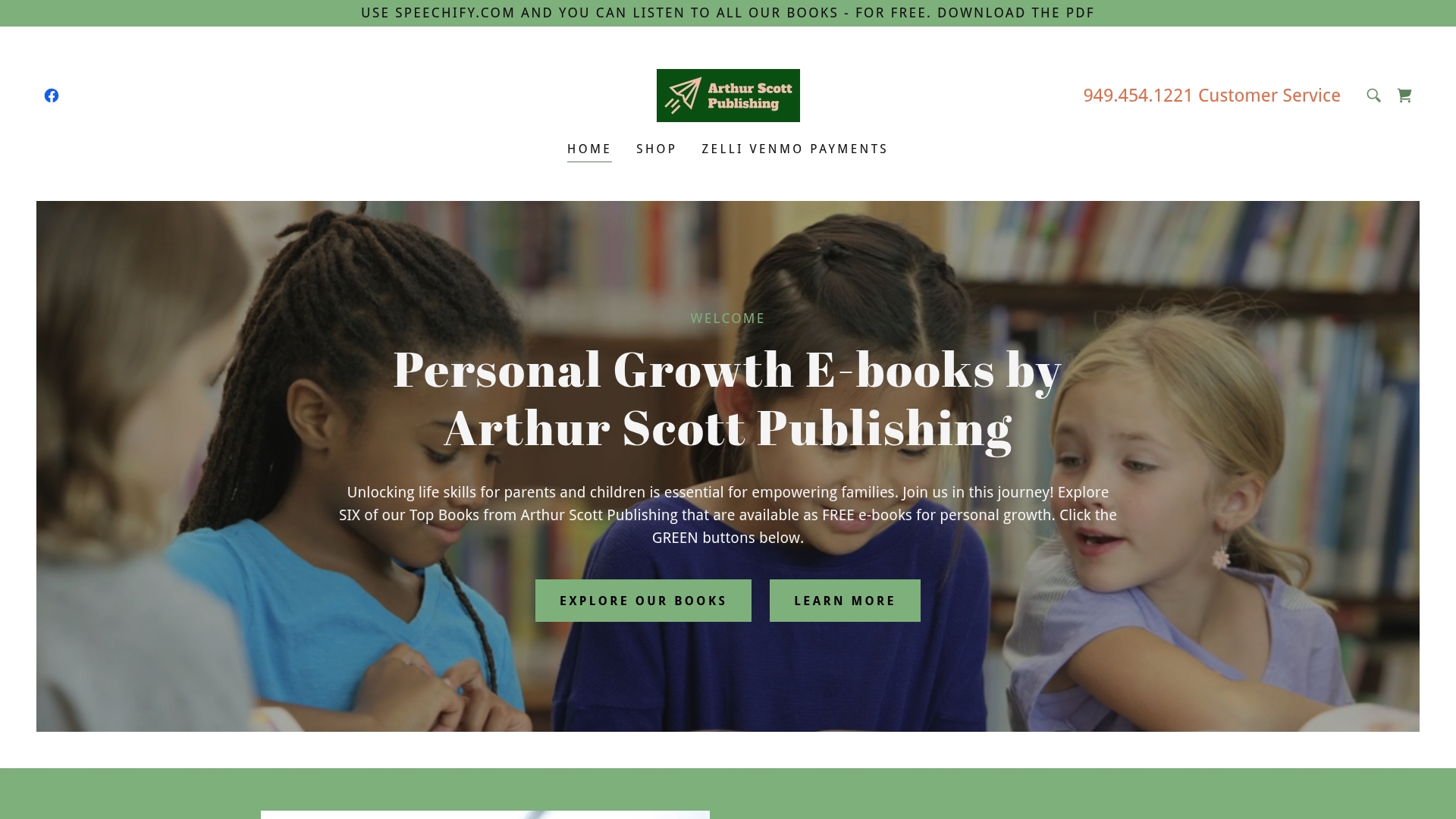
Arthur Scott Publishing offers free digital books and curated resources designed to bridge the gap between psychology and everyday family life. Whether you're working through behavioral challenges, building emotional resilience, or simply trying to show up more present for your kids, the resources here meet you where you are. If you've ever felt like parenting is a tough 24-7 job, you're right, and you deserve support that reflects that reality. Explore the full range of resources and learn more about Arthur Scott Publishing's impact on families who are doing exactly what you're doing: choosing to grow.
Frequently asked questions
What makes a self-improvement book effective for families?
An effective book combines evidence-based strategies with practical activities for both parents and children, focusing on emotional regulation and genuine connection rather than compliance. Effective books emphasize skill-building over control-based approaches.
How can parents use The Whole-Brain Child Workbook with their children?
Parents can work through age-specific exercises and worksheets together with their children to reinforce brain integration strategies and help kids understand their own emotional responses. The workbook offers practical exercises designed for direct family use.
Why is limiting screen time important for family mental wellness?
Reducing screen time, especially before bed, supports better sleep and creates space for the face-to-face connection that children's nervous systems need to develop well. The CDC links reduced screen time with improved mental health and sleep outcomes in children.
How does Brain-Body Parenting approach challenging child behaviors?
Rather than addressing behavior as a discipline problem, it treats difficult behaviors as signals from a stressed nervous system, with parental co-regulation as the primary response tool. This bottom-up parenting model shifts the focus from control to connection and support.
Can these books help improve parental self-care?
Yes. Several of the books in this list treat parental self-care as clinically essential, not optional, because your emotional state directly shapes your child's ability to regulate themselves. Parental self-care is crucial for sustaining the capacity to support children's emotional growth.