
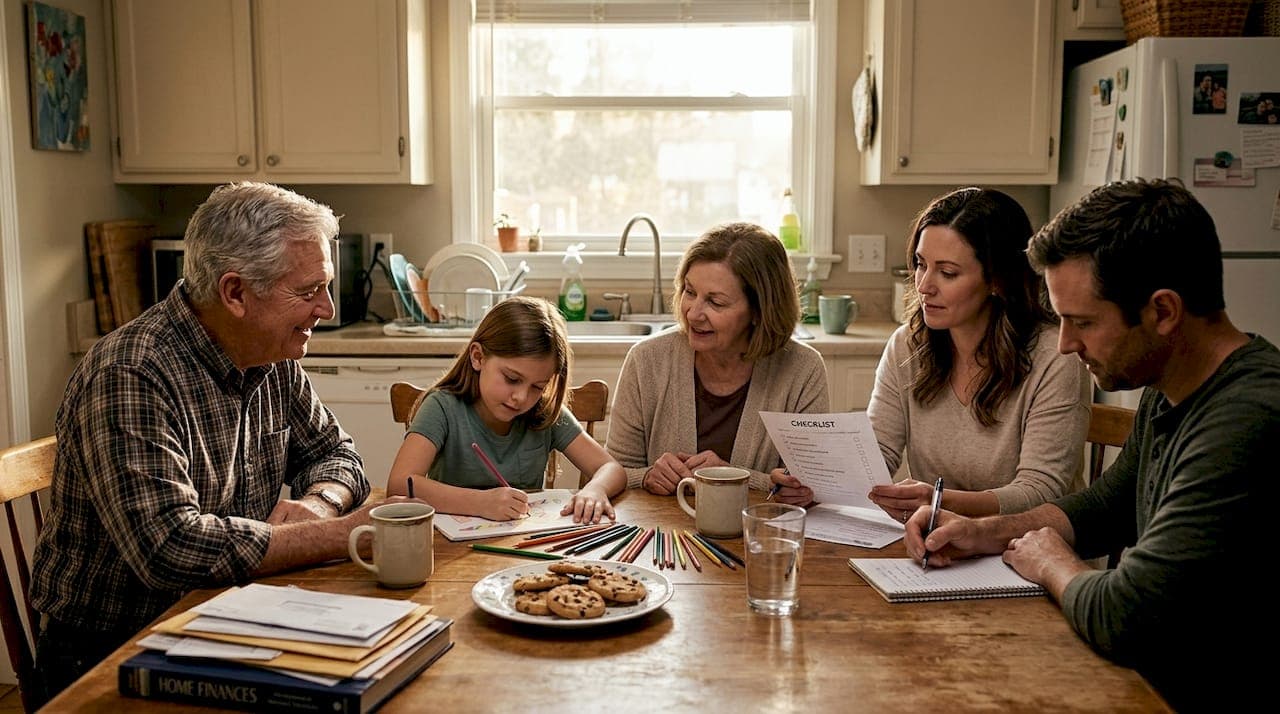
Supporting a family's growth is one of the most rewarding and demanding things you will ever do. It goes far beyond tracking when your child first walks or says a word. True family growth means nurturing emotional resilience, building strong relationships, establishing healthy daily habits, and staying flexible as your children and circumstances change. The CDC milestone checklists cover children from 2 months to 5 years across social, language, cognitive, and motor skills, with 75% of children expected to reach each milestone by the listed age. This guide gives you a practical, research-backed family growth checklist to use right now.
Table of Contents
- Understand official developmental milestones for children
- Expand the checklist: Emotional health and family connections
- Holistic family growth: Adding practical skills and habits
- Family growth checklist: Common gaps and how to address them
- Why every family needs its own growth checklist: Beyond milestones
- Grow together with resources for joyful family life
- Frequently asked questions
Key Takeaways
| Point | Details |
|---|---|
| No one-size-fits-all | Every family needs a customized checklist that evolves with their needs. |
| Start with core milestones | Use official checklists as a foundation, but expand to include emotional and practical skills. |
| Adapt for growth | Assess and update your checklist regularly, seeking professional input for concerns. |
| Emotional health matters | Foster resilience, open communication, and routines for holistic growth. |
Understand official developmental milestones for children
Developmental milestones are behaviors and skills that most children can do by a certain age. They cover four main areas: social and emotional development, language and communication, cognitive growth (thinking and learning), and physical movement. Think of them as signposts on a road trip, not a finish line.
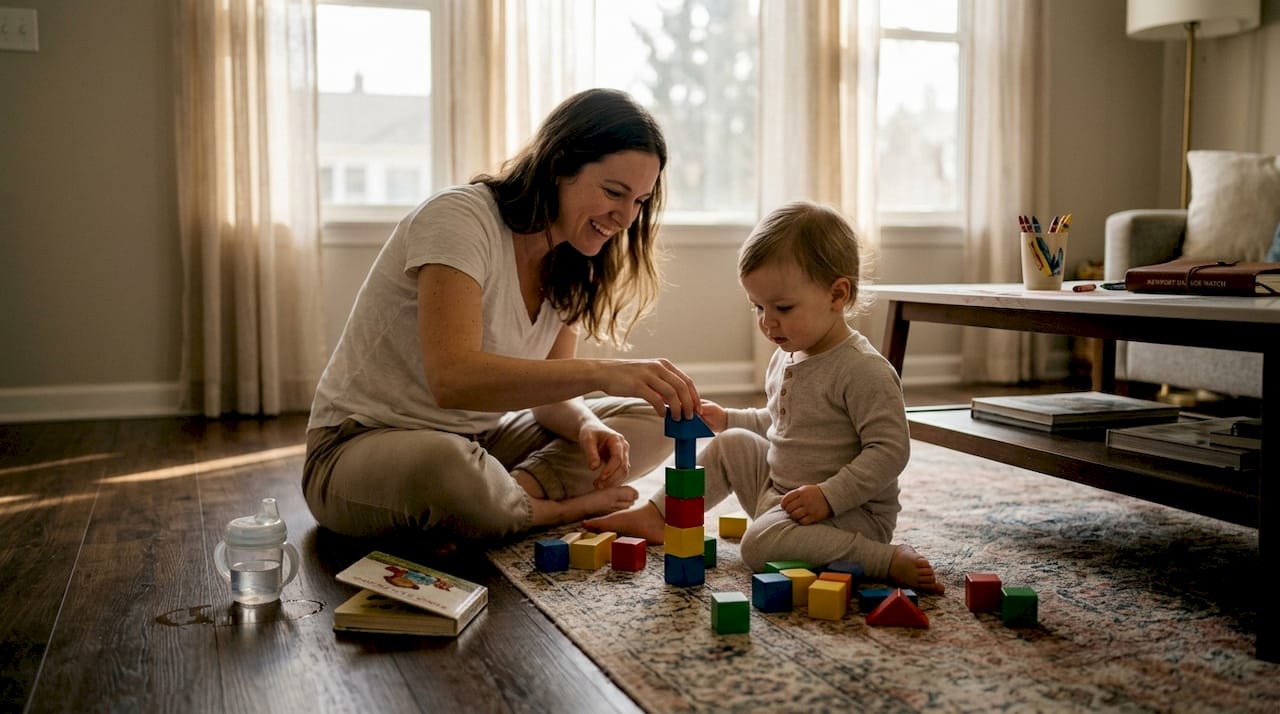
The CDC offers one of the most trusted sets of tools for tracking these signposts. Their official milestone checklists cover children from 2 months through 5 years and are designed to be used at well-child visits with your pediatrician. Each checklist is organized by age group and skill category, making it easy to spot patterns over time.
Here is a quick look at the four developmental areas and what they cover:
| Developmental area | Examples of tracked skills |
|---|---|
| Social and emotional | Smiling, sharing, managing emotions |
| Language and communication | Babbling, vocabulary, following directions |
| Cognitive | Problem-solving, memory, curiosity |
| Physical movement | Rolling, walking, fine motor control |
Using these checklists well means understanding a critical point: they are guides, not grades. The 75% threshold means a milestone is listed at the age when 75% of children typically achieve it. That leaves a meaningful portion of healthy children who develop on a slightly different timeline.
Here is how to use official milestone checklists effectively:
- Review the checklist for your child's current age before each well-child visit.
- Note skills your child shows consistently, not just once.
- Bring specific observations and questions to your pediatrician.
- Avoid comparing your child directly to siblings or neighbors.
- Track progress over time rather than focusing on a single snapshot.
As one child development expert puts it:
"Milestones are meant to prompt conversation, not create anxiety. They give families a shared language to talk about growth."
If you notice your child is not reaching several milestones in a particular area, that is the right time to ask for a developmental screening. Early intervention is effective for roughly 25% of children with delays, and the sooner support begins, the better the outcomes. You can also explore 5 key milestones for parents to build a broader picture of what healthy development looks like across the early years.
Expand the checklist: Emotional health and family connections
Once you have a handle on developmental milestones, the next layer of your family growth checklist is emotional health. This is where many families find the biggest gaps, and the biggest opportunities.
Healthy emotional development does not happen by accident. According to the American Academy of Pediatrics, key building blocks for mental and emotional wellness include safe and stable relationships, open communication, emotion management, and problem-solving skills. These are reinforced every day through routines, play, and positive discipline.
Here is what to include in the emotional health section of your checklist:
- Safe relationships: Does your child feel secure with at least one trusted adult?
- Emotion vocabulary: Can your child name feelings like frustrated, nervous, or proud?
- Conflict resolution: Does your family have a calm, consistent way to work through disagreements?
- Positive discipline: Are boundaries set with warmth and explanation rather than punishment alone?
- Play time: Is unstructured play a regular part of your child's week?
Routines are one of the most powerful and underused tools in a parent's kit. A predictable daily structure reduces anxiety for children and creates natural moments for connection. A consistent nursery routine helps young children feel safe, and that sense of safety is the foundation for emotional growth.
Open communication is another checklist anchor that families often overlook until there is a problem. Building it early means your children are far more likely to come to you when things get hard.
"Children who feel heard at home are more likely to ask for help when they need it most."
Pro Tip: Create simple family rituals that open the door to honest conversation. A weekly dinner where everyone shares one good thing and one hard thing from their week costs nothing and builds enormous trust over time. Even a five-minute check-in before bed can shift the emotional temperature of your whole household.
Holistic family growth: Adding practical skills and habits
Emotional wellness and developmental milestones are essential, but your family growth checklist is not complete without practical life skills and healthy daily habits. These are the routines that keep bodies strong, minds sharp, and families functioning well under pressure.
The American Academy of Pediatrics builds these elements directly into their well-child visit tools. For example, their 10-year-old checkup checklist covers emotional health, school performance, nutrition, safety, family relationships, and physical activity all in one structured review. That scope tells you something important: pediatric care has always understood that health is holistic.
Here is a practical sequence for weaving these habits into your family's daily life:
- Establish a sleep schedule. Children ages 6 to 12 need 9 to 12 hours of sleep per night. Set consistent bedtimes and wake times, even on weekends.
- Plan balanced meals together. Involve children in simple meal prep. It builds nutrition awareness and gives them a sense of ownership over their health.
- Build in physical activity. Aim for at least 60 minutes of movement daily for school-age children. It does not have to be structured sport.
- Teach basic safety habits. Road safety, online safety, and knowing when to ask an adult for help are all age-appropriate skills to practice.
- Introduce time management early. Simple tools like visual schedules or homework timers help children build self-management skills that carry into adulthood.
- Model self-care. When children see caregivers resting, setting limits, and asking for help, they learn that self-care is a strength, not a weakness.
Pro Tip: Use your child's next well-child visit as a natural checkpoint for your family growth checklist. Bring notes on sleep, nutrition, screen time, and any behavioral changes. Pediatricians can offer personalized guidance that goes well beyond the standard exam. You can also review an essential child care checklist to make sure no practical area gets overlooked.
Stat spotlight: Structured checkup checklists are now standard practice in most pediatric offices across the country, reflecting a shift toward whole-child, whole-family care rather than isolated health screenings.
Family growth checklist: Common gaps and how to address them
Even the most thoughtful parents have blind spots. The most common gaps in a family growth checklist fall into a few predictable categories: over-reliance on milestone charts, failure to adapt as children age, and not accounting for children with delays or special circumstances.
Here is a comparison of two common checklist approaches:
| Approach | Strengths | Limitations |
|---|---|---|
| Milestone-only tracking | Clear, age-based benchmarks | Misses emotional and social depth |
| Holistic well-being checklist | Covers the whole child and family | Requires more effort and customization |
The most effective approach combines both. Use milestone charts as your baseline, then layer in emotional, practical, and relational elements to create a full picture.
For children with developmental delays or special needs, the checklist needs to flex. Variations in development are normal, and a checklist that only measures typical timelines can leave families feeling like they are failing when they are not. The goal is progress, not perfection.
Here are common checklist gaps and how to close them:
- Ignoring emotional regression: Children often move backward under stress. Build in space for this on your checklist.
- Skipping the caregiver section: Family growth includes adult well-being. Are you getting rest, support, and connection?
- Not updating for age: A checklist for a 4-year-old looks very different from one for a 10-year-old. Revisit yours at every major transition.
- Missing professional input: For any concern that persists, a developmental pediatrician or family therapist can offer targeted guidance.
For families navigating the preschool years specifically, pre-schooler parenting tips can help you spot and address gaps before they grow into bigger challenges.
Why every family needs its own growth checklist: Beyond milestones
Here is something most parenting resources will not say out loud: no checklist will ever fully capture your family's growth. And that is actually good news.
Checklists are starting points. They give you a shared language, a structure for reflection, and a way to spot what needs attention. But the families we see thrive are not the ones who check every box. They are the ones who stay curious, keep talking, and adapt when life changes.
There is a real risk in treating any checklist as a report card. When parents focus too hard on hitting benchmarks, they sometimes miss what their child is actually communicating. A child who is not yet reading at grade level might be showing extraordinary emotional intelligence. A child who struggles socially might be developing deep creative focus. Growth is not linear, and it rarely looks the same in two families.
The most powerful thing you can do is build a checklist that reflects your family's specific strengths, challenges, and values. Start with the research-backed frameworks. Then ask: what does thriving actually look like for us? That question, revisited regularly, is worth more than any standardized form.
Grow together with resources for joyful family life
Putting a family growth checklist into practice is easier when you have the right support behind you. Whether you are navigating toddler tantrums, teen communication challenges, or simply trying to build stronger daily routines, the right resources make a real difference.

At Arthur Scott Publishing, Dr. Arthur Scott's background in psychology and family empowerment shapes every resource we offer. Our free e-books and guides are designed to meet parents and caregivers exactly where they are. Explore our parenting resources for practical tools that complement your checklist, and learn more about Arthur Scott Publishing's family impact to see how families just like yours are growing stronger every day.
Frequently asked questions
What are the most important components of a family growth checklist?
A strong checklist covers child milestones, emotional wellness, family routines, healthy habits, safety, and open communication. The key building blocks for emotional health are just as essential as physical development markers.
How do I track and support my child's developmental milestones?
Use the CDC's official milestone checklists and review them at each well-child visit so your pediatrician can help you catch concerns early and celebrate progress.
What should I do if my child isn't meeting milestones?
Contact your healthcare provider for a developmental screening. Since early intervention works for roughly 25% of children with delays, acting quickly gives your child the best possible advantage.
Is there a universal family growth checklist I can use?
No single checklist fits every family. Combine CDC milestone guidance with emotional strategies and practical daily habits to build a personalized plan that reflects your family's needs.
How often should I update our family growth checklist?
Review your checklist at key transitions such as new school years, age milestones, or major family changes to keep it relevant and useful for where your family is right now.