
Getting quality educational materials has never been easy for everyone. Textbook prices have soared, physical libraries have limited hours, and geography still locks millions of people out of the resources they need most. The advantages of free educational ebooks cut straight through those barriers. Whether you are a parent building a home library, a student stretching a tight budget, or someone working on personal growth between shifts, free ebooks give you access to learning that used to cost serious money or require serious connections. This article breaks down the real, research-backed benefits, along with practical tips for making the most of them.
Table of Contents
- Key takeaways
- 1. Breaking down access barriers everywhere
- 2. Real financial relief for students and families
- 3. Built-in accessibility for diverse learners
- 4. Engagement that actually improves performance
- 5. Customization that fits your actual learning goals
- 6. Better retention and lower dropout rates
- 7. Practical tips for finding and using quality free ebooks
- My take on why free ebooks matter more than people admit
- Discover free resources at Arthurscottpublishing
- FAQ
Key takeaways
| Point | Details |
|---|---|
| Zero cost, real savings | Institutions have saved over $30 million through free educational resources, and individual learners benefit too. |
| Accessibility for everyone | Free ebooks support diverse learners through adjustable fonts, audio narration, and built-in dictionaries. |
| Engagement that moves the needle | Interactive digital textbooks show effect sizes up to d=1.39 in academic performance improvements. |
| Fully customizable content | Educators and families can modify, remix, and update open educational resources to fit specific learning goals. |
| Practical selection matters | Prioritize DRM-free, regularly updated sources to get the most lasting value from free educational ebooks. |
1. Breaking down access barriers everywhere
The most immediate advantage of free educational ebooks is simple: you can get to them. No campus required. No waiting list. No shipping delay. As long as you have a phone, tablet, or computer and a Wi-Fi connection, the material is right there.
This matters enormously for non-traditional learners. Remote students, working parents, adults returning to education, and children in under-resourced schools all benefit when learning is not tied to a physical location or a library's operating hours. Free book access has shown a 35% increase in grade-level reading benchmarks in high-poverty schools, at a cost of just $68 per student over five years. That ratio is hard to argue with.
Free ebooks also work across devices, which removes another layer of friction. A student can start reading on a school computer and pick up where they left off on a family tablet at home.
Pro Tip: Download ebooks directly to your device rather than relying on cloud-only access. This way, you can read during commutes or in areas with spotty internet, and you always have the material on hand.
2. Real financial relief for students and families
Let us be direct about the numbers. College textbooks regularly cost between $150 and $300 each. A full semester can run $600 or more just in reading materials. For families already managing tuition, childcare, and living costs, that number is not just inconvenient. It is a genuine obstacle.

Free educational resources, especially Open Educational Resources (OER), address this head-on. The University of Nebraska system alone saved students over $30 million through OER adoption. The University of Pittsburgh saved $3.02 million in a single initiative. Those savings do not disappear into a budget line. They go back to students and families who can then spend on tutoring, reliable internet, childcare, or simply on reducing financial stress.
| Learning material | Typical cost | Free ebook alternative |
|---|---|---|
| College textbook | $150 to $300 per book | $0 via OER platforms |
| K-12 supplemental workbook | $20 to $60 per title | $0 via open libraries |
| Professional development course | $100 to $500+ | Free PDFs and audio books |
| Children's reading library | $200+ to build | Free via digital platforms |
The cost-effective learning materials available today span every subject and age group. That accessibility democratizes education in a way that printed materials simply cannot match.
Pro Tip: When sourcing free ebooks, look specifically for DRM-free titles. DRM-free ebooks give you true ownership. You can back them up, transfer them between devices, and access them years from now without worrying about a platform shutting down.
3. Built-in accessibility for diverse learners
One advantage that does not get discussed enough is how well-designed free ebooks serve learners who struggle with traditional print materials. This is not a minor add-on feature. For a significant portion of readers, it is what makes learning possible at all.
Ebook accessibility features like adjustable font sizes, high-contrast display modes, built-in dictionaries, and audio narration support students with visual impairments, dyslexia, and those learning in a second language. These same features also help older adults who are returning to learning after years away from formal education.
Here is what inclusive free ebooks can offer:
- Adjustable text size and line spacing for readers with visual needs
- Text-to-speech and audio narration for auditory learners or those with reading disabilities
- Built-in translation and dictionary tools for non-native speakers
- Screen reader compatibility for learners with visual impairments
- Offline access for learners in low-connectivity environments
The impact on children is particularly well-documented. Resources like those explored at Arthurscottpublishing demonstrate how these features support children's learning and well-being in concrete, lasting ways. When a child who struggles with reading can have a book read aloud while following along, that is not a workaround. That is how effective education works.
4. Engagement that actually improves performance
A free ebook that just replicates a printed page is better than nothing. But the best free digital textbooks do something printed books cannot: they bring the content to life through interactive elements.
Research on interactive OER digital textbooks shows effect sizes ranging from d=0.50 to d=1.39 in academic performance improvements. To put that in perspective, an effect size above d=0.40 is generally considered meaningful in educational research. An effect size of d=1.39 is transformative.
What drives those numbers? Tools like embedded quizzes, short video explanations, H5P interactive activities, and immediate feedback loops keep learners actively engaged rather than passively skimming. Embedding interactive activities in digital textbooks raises motivation, relevance perception, and learner satisfaction in measurable ways.
| Feature | Static textbook | Interactive free ebook |
|---|---|---|
| Self-assessment | Separate workbook needed | Built-in quizzes and activities |
| Feedback loop | Delayed (teacher review) | Immediate, in-content |
| Multimedia support | None | Video, audio, animations |
| Learner engagement | Passive reading | Active participation |
| Personalization | One-size-fits-all | Adaptive paths available |
For students studying independently or families supporting home learning, the engagement gap between a print textbook and a well-designed free digital resource is significant. The interactive format is not just more fun. It produces better outcomes.
5. Customization that fits your actual learning goals
Traditional commercial textbooks are locked. The publisher sets the content, the sequence, and the scope. You get what you get. Open Educational Resources work differently. Educators and learners can legally modify, remix, and update OER to suit their specific needs, because OERs can be modified and tailored in ways that commercial materials with restrictive licenses do not allow.
This matters more than most people realize. Consider a parent homeschooling a child who is two grade levels ahead in math but needs extra support in reading comprehension. With traditional textbooks, the family buys separate materials for each gap. With OER and free ebooks, the parent can pull the right sections from different sources, combine them, and build a learning program that actually matches where the child is right now.
The customization benefits apply to personal development too. Adults working on family empowerment through ebooks can select chapters, topics, and formats that align with their specific goals, rather than working through material that does not apply to their lives.
Key customization advantages include:
- Educators can update outdated sections without waiting for a new edition
- Families can select age-appropriate modules from broader resources
- Learners can reorganize content to match their preferred learning sequence
- Content can be localized to reflect regional examples and cultural context
- Supplementary materials can be added without copyright barriers
6. Better retention and lower dropout rates
The financial and accessibility benefits of free educational ebooks do not just feel good. They show up in actual academic outcomes. Studies across the University of Nebraska system found that affordable course materials reduce drop, fail, and withdrawal rates while increasing enrollment retention, with the strongest effects for first-generation and part-time students.
This connection makes intuitive sense. When a student cannot afford the required textbook and has to choose between buying it or paying rent, they often do neither and fall behind instead. When that same student can access a free, complete, up-to-date digital version on day one of class, they start the semester on equal footing.
For families, this principle extends beyond college. Children who have consistent access to age-appropriate reading materials at home show stronger literacy development. The family growth benefits of consistent free digital reading resources compound over time, building not just skills but confidence and a genuine reading habit.
7. Practical tips for finding and using quality free ebooks
Not every free ebook is worth your time. Quality and currency vary widely, and the maintenance of OER quality requires significant ongoing effort that not all publishers put in. Here is how to focus on the resources that will actually serve you well.
Start with established platforms. Standard Ebooks provides professionally formatted, modern versions of public domain texts, and the difference in reading experience compared to poorly formatted alternatives is real. For academic content, MERLOT, OpenStax, and OER Commons are well-maintained and peer-reviewed.
A few practical filters to apply before committing to a free ebook:
- Check the publication or last-update date, especially for science, health, and technology topics
- Look for reviews or ratings from other learners or instructors
- Confirm the format works on your device before downloading a large file
- Prefer DRM-free formats like EPUB or PDF for long-term access
- Cross-reference key facts with a second source if the ebook is from an unfamiliar publisher
Pro Tip: Build a personal digital library by saving DRM-free ebooks to a dedicated folder on your device or a cloud backup. Organize by subject and update older titles once a year. This habit costs nothing and protects your access even if a source website goes offline.
The educational ebook advantages you gain are greatest when you approach free resources with the same critical eye you would bring to any learning tool. Free does not mean low quality. But quality still requires verification.
My take on why free ebooks matter more than people admit
I have spent years working at the intersection of psychology, personal development, and family empowerment, and what I have observed consistently is this: the biggest barrier to growth is not motivation. It is access. People want to learn. They want to do better for themselves and their families. What stops them is the gap between that desire and the materials they need to act on it.
Free educational ebooks close that gap in a way that motivational advice alone never could. What I find underestimated is the customization angle. Most people think of free ebooks as a cheaper version of something else. But the ability to modify, remix, and build personalized learning paths is genuinely superior to what expensive commercial materials offer. That is not a consolation prize. It is an actual advantage.
I will be honest about the challenge too. Finding consistently high-quality free resources takes some effort upfront. The landscape is uneven. But once you know where to look and what signals indicate quality, the effort pays off quickly. My practical advice: start with one trusted platform, build your library gradually, and treat your collection of free resources like an investment. Because it is.
— Art
Discover free resources at Arthurscottpublishing
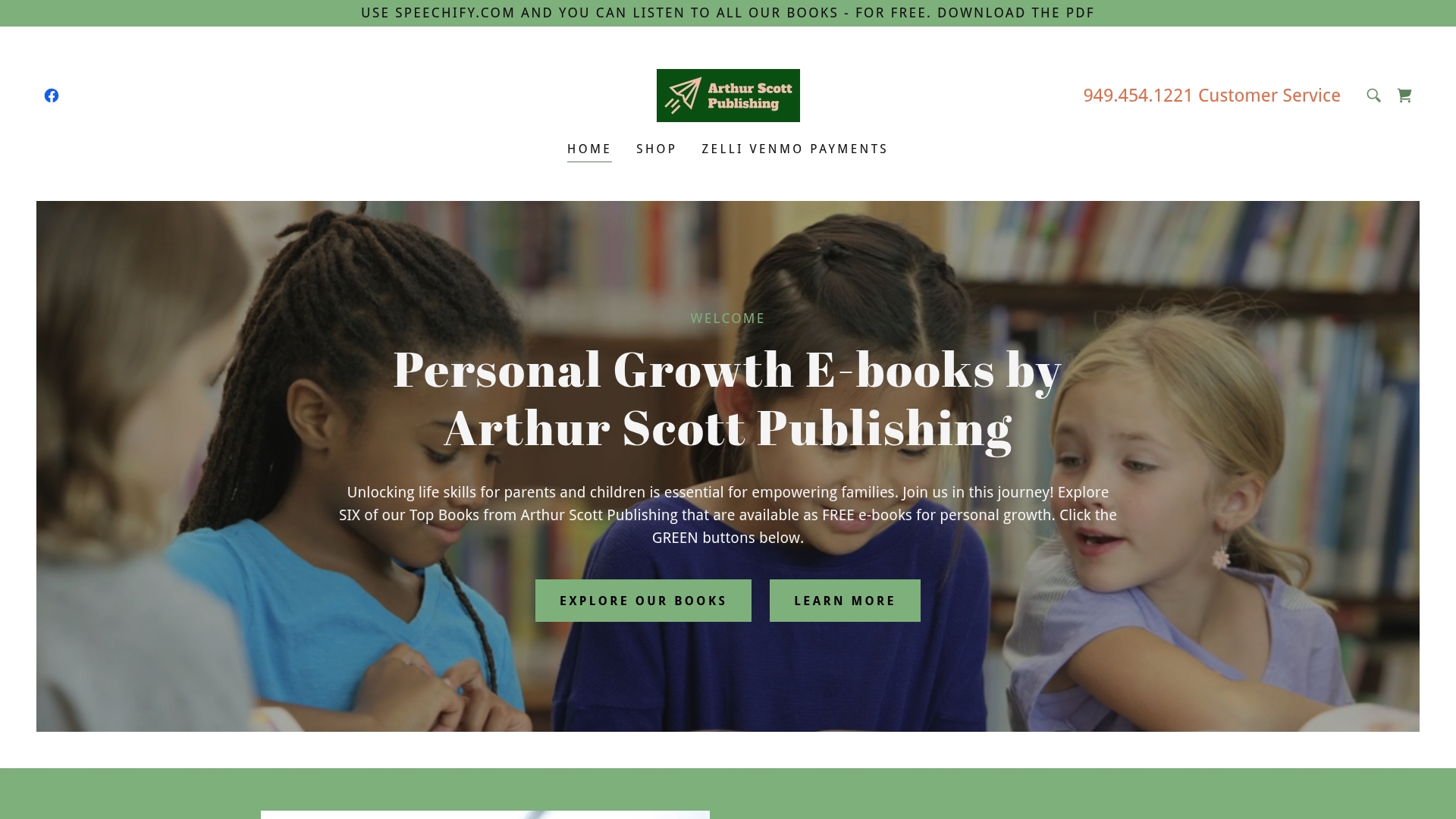
Arthurscottpublishing was built on the belief that knowledge should not be gated by income or geography. Dr. Arthur Scott brings his background in psychology and personal development to a growing library of free digital books and audio resources focused on family empowerment, behavioral health, and self-awareness. Whether you are a parent looking for tools to support your family's growth or an individual working on your own development, the resources here are designed to meet you where you are. Start with the parenting support resources or explore the full platform impact to see what is available for you right now.
FAQ
What are the main advantages of free educational ebooks?
Free educational ebooks offer zero-cost access, built-in accessibility features, interactive learning tools, and the flexibility to customize content. Research shows they improve academic performance and help reduce student dropout rates.
Are free ebooks actually as good as paid textbooks?
Many free ebooks, especially OER titles from platforms like OpenStax or Standard Ebooks, match or exceed the quality of commercial textbooks. Interactive digital versions show effect sizes up to d=1.39 in academic performance improvements, which surpasses what most static paid textbooks achieve.
How do free ebooks help families on tight budgets?
Institutional adoption of free educational resources has saved students over $30 million in some systems. For individual families, eliminating textbook costs frees up money for other academic needs like tutoring, technology, or extracurricular activities.
What does DRM-free mean and why does it matter?
DRM-free means the ebook has no digital restrictions limiting how you use it. You can back it up, transfer it across devices, and access it indefinitely without depending on a specific platform staying operational.
Where should I start looking for quality free educational ebooks?
Start with OpenStax for college-level academic content, Standard Ebooks for well-formatted public domain literature, and OER Commons for K-12 and professional development materials. Always check the publication date and look for educator reviews before committing to a resource.